Rules
Part of Intimate image consent and safety guide: creation, possession, sharing, coercion, threats, evidence
Intimate image response problems: rushed deletion, unsafe contact and false helpers
Intimate image response problems run from rushed deletion to false helpers, and each one has a calmer fix than the first panicked hour allows.
What to take away
- The person who distributed the image owns that conduct, not the person in it.
- Deleting the thread first can destroy the URL, account handle and timestamp a report needs.
- Contacting the uploader directly can escalate stalking or trigger a wider upload.
- One removed URL is progress; mirrors, crops and new hosts are a separate job.
- Anyone promising guaranteed removal before reading your case is selling fear.
Seven things go wrong in the first week after an intimate image is posted. None of them is the fault of the person in the picture. Each has a calmer fix than the panic allows, and the fix usually costs less than the panic does.
Problem 1: Blame lands on the wrong person
"Why did you send it?" moves the question from the unauthorized act to the person it targeted. Consent to take a photo, or to share it privately, is not consent to publish it. Being asked that question is also the reason many people never file a report.
Replace interrogation with a menu. Ask whether the person is safe, whether they want the URL written down, and who they want told. Do not demand the image or a full account before offering help.
The Cyber Civil Rights Initiative's Safety Center starts with physical safety, names several forms of image-based sexual abuse, and lays out options a person picks from rather than a required order. It also runs an image-abuse helpline and legal referral paths. Check what is currently staffed in your country.
Problem 2: Deleting before documenting
Blocking the account or deleting the thread brings relief and removes the evidence with it. The handle, the post URL, the caption and the time it appeared are what a platform report and a police file are built on.
Record those details from a device the uploader cannot reach, then change your access settings. Keep the record small: one folder, limited access, not a routine messaging app. If the material may involve a minor, do not download or forward it at all; contact the platform's child safety channel or a child protection authority and follow their instructions.
Problem 3: Making contact
A message telling the uploader to take it down confirms you found it, confirms it matters, and hands over your current email or number. If the person knows where you live or work, that message can reach your household, your employer or your children's school.
Let an advocate, a lawyer, the platform's safety team or an investigator make contact where contact is needed. A friend should not pose as you, run a sting, or threaten retaliation. The intimate image response checklist walks through who does which task, in what order, when more than one person is helping.
Problem 4: The copy that comes back
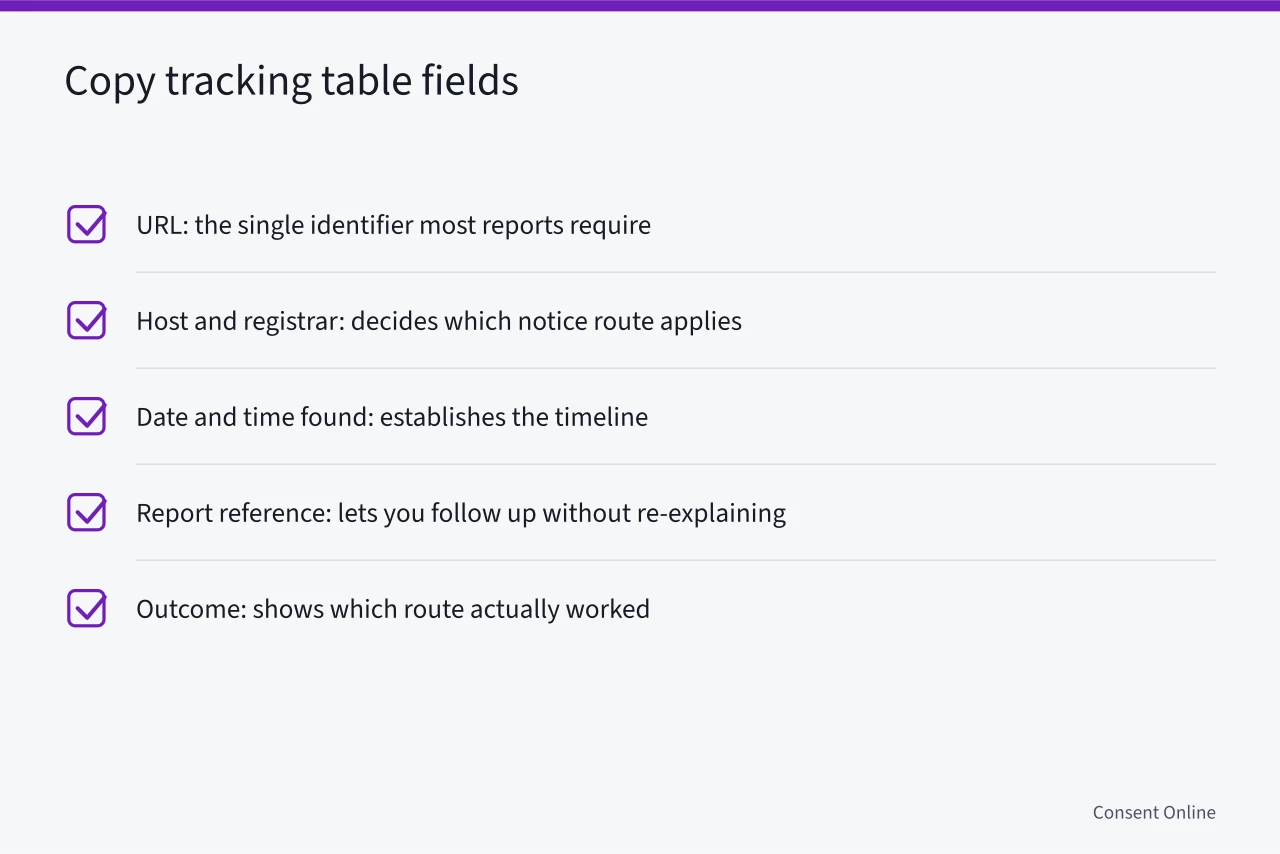
Removal from one service is not erasure. The same image reappears cropped, renamed, in a private group, or on a host in another country. Keep one table with columns for URL, host, date found, report reference and outcome.
Hash matching catches exact and near copies on services that participate, with eligibility rules and coverage gaps you cannot see from outside. Report the copies it misses by hand. Set two search windows a week, or hand monitoring to someone else, so discovery stops setting the shape of your day.
| Field | Why it matters |
|---|---|
| URL | The single identifier most reports require |
| Host and registrar | Decides which notice route applies |
| Date and time found | Establishes the timeline |
| Report reference | Lets you follow up without re-explaining |
| Outcome | Shows which route actually worked |
Problem 5: Helpers who are not
Scammers work this market as investigators, hackers, lawyers, recovery firms and platform staff.
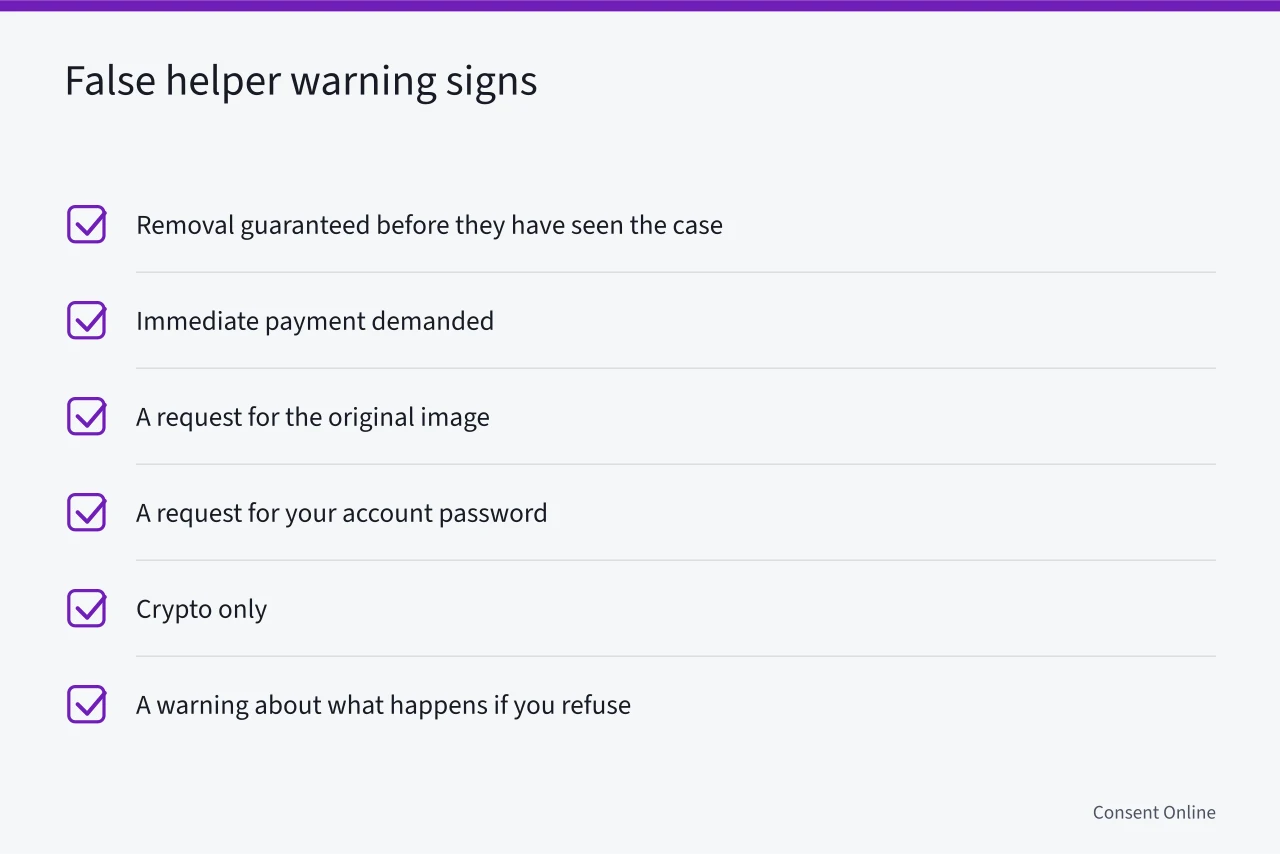
Check the legal identity, the licence or registration, and the staff named on the site. Check the written scope, the fee structure, and the refund terms. Check the privacy policy, using a source other than the helper. Never grant remote access to a device for an unsolicited offer of help.
Problem 6: When the parties sit in different countries
The person targeted, the uploader, the platform, the host and the audience can each be somewhere else. Definitions, police powers, court procedure, evidence rules and which services operate at all will differ between them. A platform policy can remove a post where a lawsuit would go nowhere, and a search delisting can leave the source untouched.
The UK's Revenge Porn Helpline sets out adult intimate-image reporting options, covering direct URLs, platform reports, police case numbers and outside support. It limits its service to adults and its legal statements to the UK, which is the honest position. Readers elsewhere need local counsel and local support.
Problem 7: The cost of reading it again
Every form, every rejection and every search means looking at the material again. Work in short sessions with a start and stop time. Let one person keep the log and a different person sit with you, so the same friend is not both witness and note-taker.
Nonurgent work can wait. A platform form filed on Thursday instead of Tuesday is not a moral failure. If there is any risk of self-harm or immediate danger, contact emergency services or a crisis line now rather than finishing the list.
Common questions
Is it wrong to stop searching for copies?
No. Monitoring is optional, can be delegated, and can be paused. Your wellbeing is part of the response, not a distraction from it.
Should a helper save the image on a personal phone?
Usually not. Record the URL, handle and timestamp instead. Where an image file is genuinely needed, use a lawful method set up by a lawyer or investigator, and never for material involving a minor.
Does a cross-border case mean nothing can be done?
No. Platform policy, host and registrar notices, search delisting, account security and local legal routes can each reduce harm. None of them is guaranteed, and they do not depend on each other.
How do I check a removal company?
Verify its legal identity, staff credentials, business address, and written scope. Also verify its refund terms, privacy policy, and independent complaints record. Treat any promise of guaranteed removal as a reason to walk away.