Features
Part of Intimate image consent and safety guide: creation, possession, sharing, coercion, threats, evidence
Supporting a fictional adult creator after a private image is reposted without consent case
A fictional adult creator's private image is reposted and used for extortion, and a small support team works through safety, evidence, and removal.
What to take away
- Safety and account access come before any removal request.
- Record URLs, usernames and case numbers without forwarding the image itself.
- The creator decides who learns what, and when.
- Platform, host, search and legal routes run on separate tracks with separate case numbers.
- Nobody promises that every copy is gone.
Mara is an invented adult creator. The accounts, brands and URLs here are invented too. This case shows a response process, not a legal standard, and not the right answer for every person.
The incident
Mara made a private image for one adult partner. She never authorized public posting or commercial use. A follower sends her a link to an account that reposted the image beside her professional name. A separate unknown account demands money to stop further uploads.
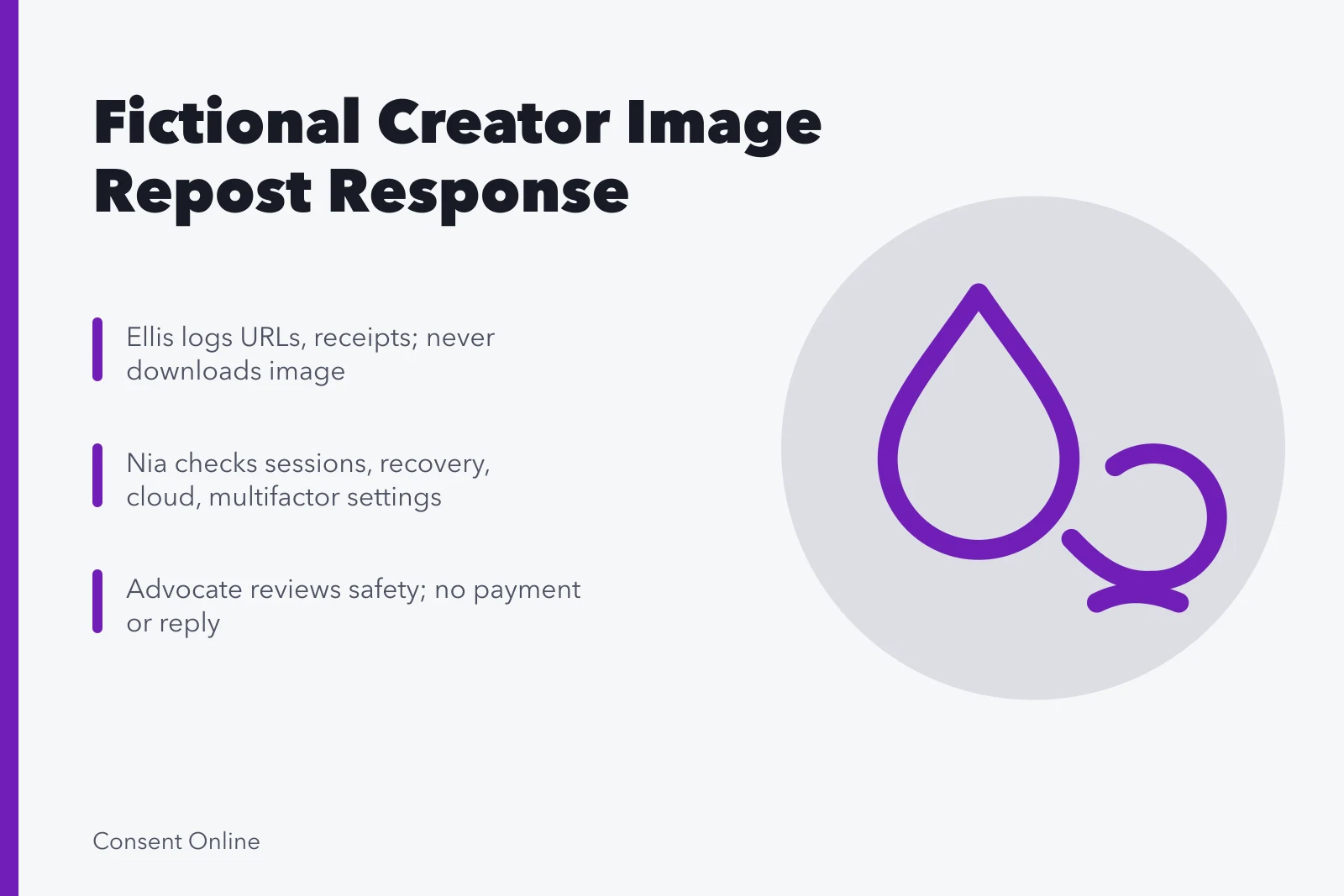
Her producer, Ellis, asks two questions first: is she physically safe, and does anyone else still have access to her home or her accounts. Mara reports no known physical threat. An old tablet may still be signed in.
Assigning narrow roles
Mara picks three helpers and limits what each one touches.
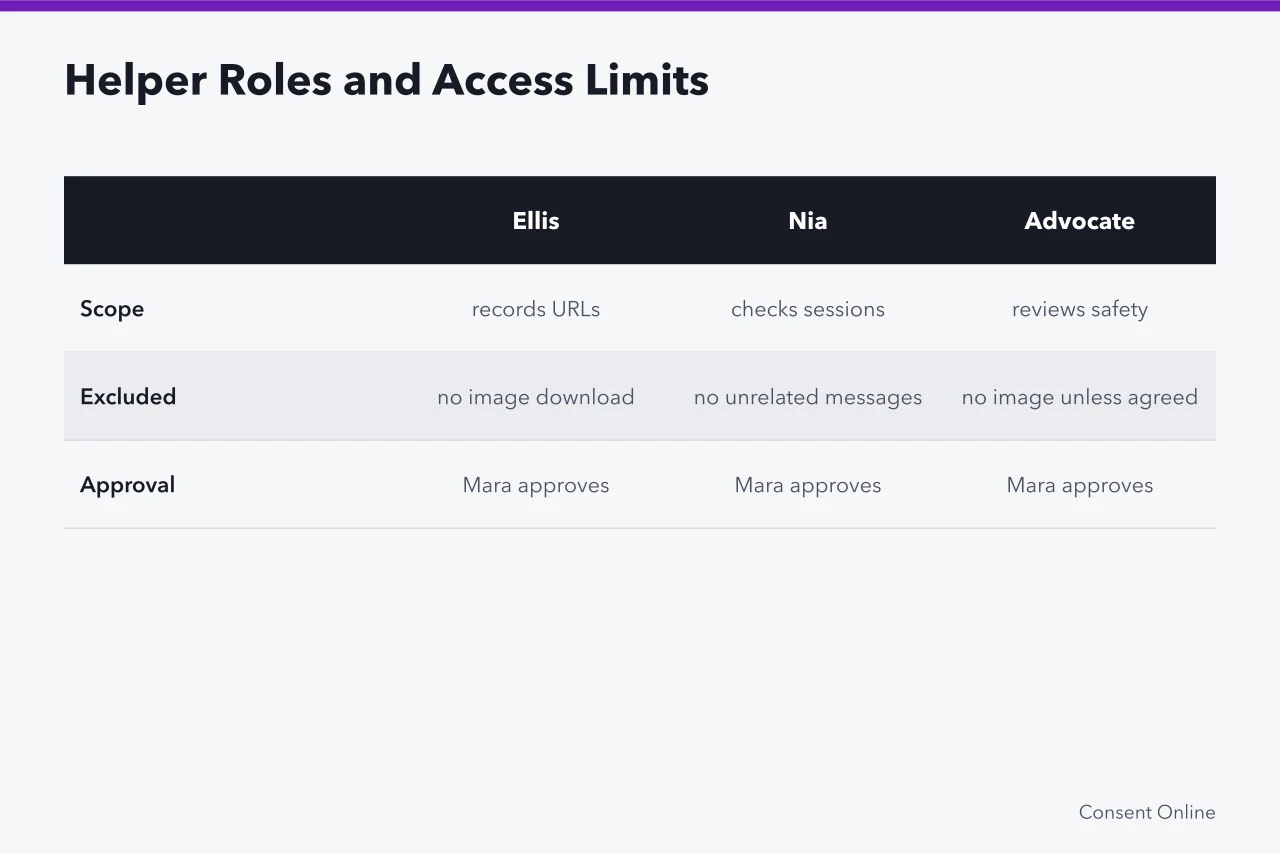
Mara keeps approval over public statements and legal consultations. The team files everything under one incident number so intimate details stay out of calendar titles and chat previews.
RAINN's guidance on talking with survivors sets the tone: believe the person, say plainly that this was not her fault, offer help without pressure, and follow her pace. The team uses that approach without assuming Mara's experience matches anyone else's.
Preserving evidence without multiplying it
Ellis logs several items from the post:
- the post URL
- the profile URL
- the username
- the display name
- the date and time zone
- the visible caption
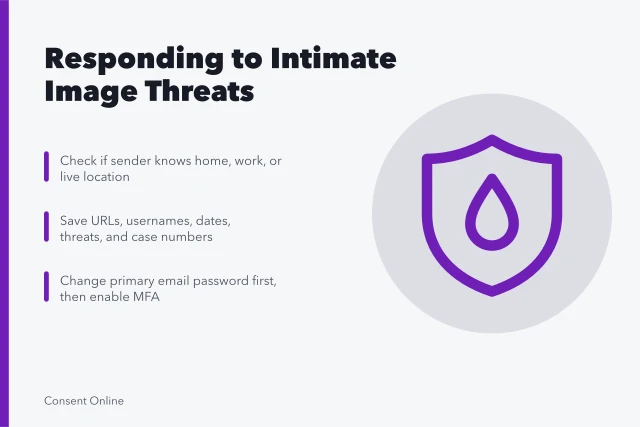
- the extortion account's exact wording He saves report receipts into a restricted folder. He does not forward the post to anyone else on the team.
Mara keeps the original message on her own device while the advocate helps her decide whether to contact law enforcement. Nobody replies to the demand. Nobody pays it. Local counsel may have views on how original evidence should be held, so the team leaves that question open.
Securing accounts
Nia works from a device Mara trusts. They change the main email password, then read the recovery addresses and forwarding rules rather than assuming they are clean. They list active sessions and sign out the old tablet. Cloud albums, shared folders, connected apps, phone-account access and multifactor settings all get the same pass.
The review finds the tablet had cloud access. It finds no sign the tablet exported the image. Nia writes down that narrow fact. She does not name the tablet as the source.
Running removal tracks
Ellis files the platform's nonconsensual-intimate-image report for the post. He files a separate impersonation report for the account name, and records both case numbers. The host removes the post. One search thumbnail stays up.
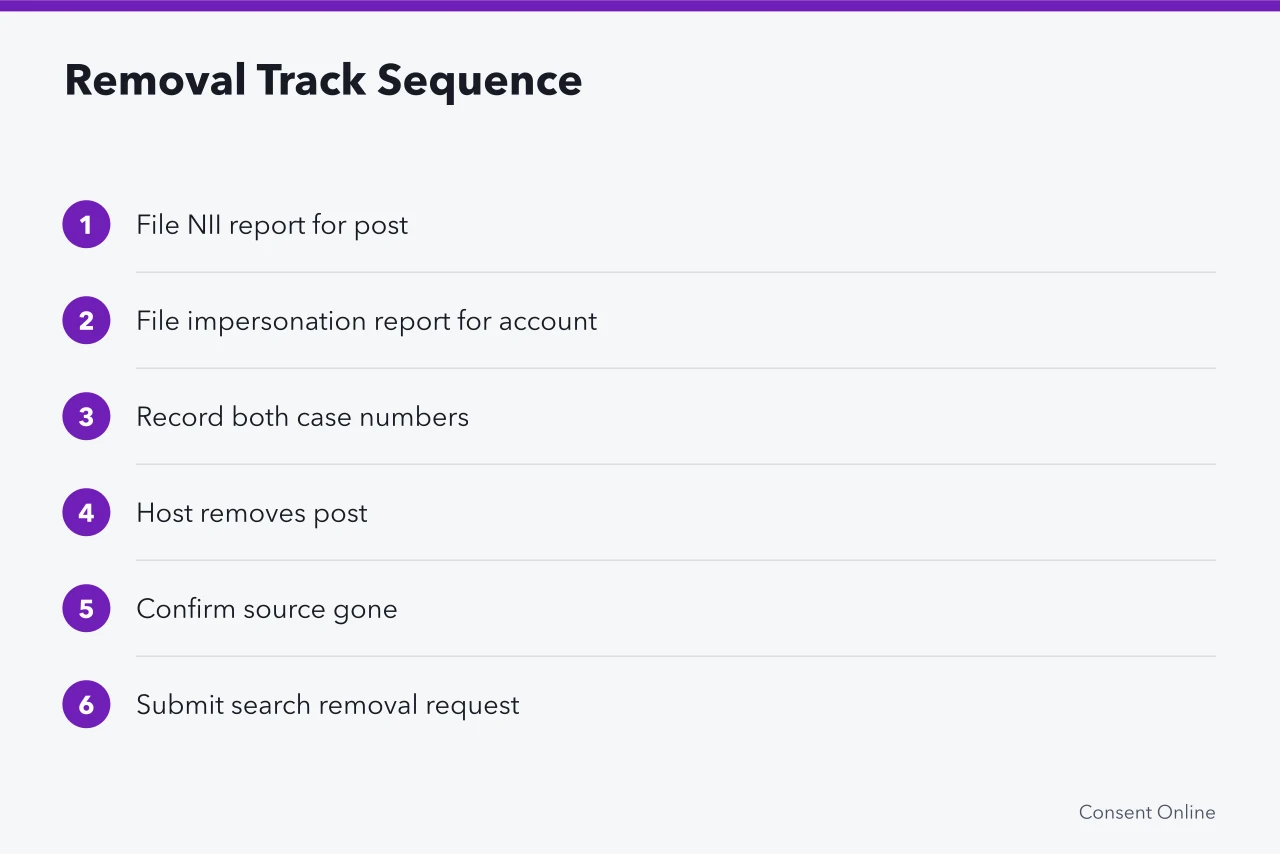
Google explains that removing an image from Search normally does not remove it from the site that hosts it, and describes a refresh once the source page changes. Ellis waits until the source post is confirmed gone, then submits the request. He never calls search removal internet-wide deletion.
Protecting Mara's recovery
Mara asks Ellis to check for copies twice a week for a month. He reports only new actionable URLs, not every variation he finds. Comments carrying the link are hidden from her work dashboard. Her public statement says unauthorized material is being addressed. It names no suspected person and does not repeat the threat.
The advocate lays out counseling and legal options. Mara takes both, pauses two live appearances, and keeps one planned shoot with a team she trusts. Support that forces a targeted person out of public life is not support.
What the case does not prove
The response does not establish who uploaded the image, how they got it, whether a crime occurred in any named jurisdiction, or whether every copy is gone. Those questions need evidence and qualified review. What the case shows is disciplined handling while the answers are still unknown.
Common questions
Why did the team avoid naming a suspect?
They had no verified attribution. A public accusation that turns out to be wrong is unsafe for Mara and exposes her to legal risk. Attribution belongs with platform investigators and law enforcement.
Why file two platform reports?
The repost and the misleading account identity raise different policy questions. Each report went through the route closest to its own question, which also produces two case numbers to track.
Why did Mara keep working?
That was her call. A response plan should not require a targeted person to withdraw from lawful work or from public life as the price of being helped.
Was the case resolved?
The known post came down, the stale thumbnail was addressed, and account access was tightened. The team never claimed that all private copies stopped existing.