Rules
Part of Creator collaboration guide to image permissions
Creator collaboration problems: rights and image use
Creator collaboration problems involve missing signatures, broad rights grants and image reuse. Learn to document permission, limit scope and handle disputes.
What to take away
- A finished shoot does not fix an unsigned release or a signer who lacked authority.
- Perpetual, worldwide, transferable rights can outlast the fee and the purpose everyone discussed.
- Possession of the files is not ownership, and ownership is not permission to publish.
- Reuse outside the agreed scope needs a written extension with its own fee and removal terms.
- An exit plan has to cover live posts, unfinished work, account access, money and files.
What the dispute actually is
Creator collaboration problems often start because the work is memorable and the rights record is not. People remember the shoot day. Nobody remembers which draft was accepted, or who signed it.
The first move is to stop the uncertain use, gather what was written at the time, and shrink the argument to the questions that matter. Do not reconstruct the past from memory.
Missing or defective signature
Common versions: the creator started after an email saying "looks good," but the attachment was never signed. A manager signed a participant release without clear authority to bind the talent. Someone signed a superseded draft.
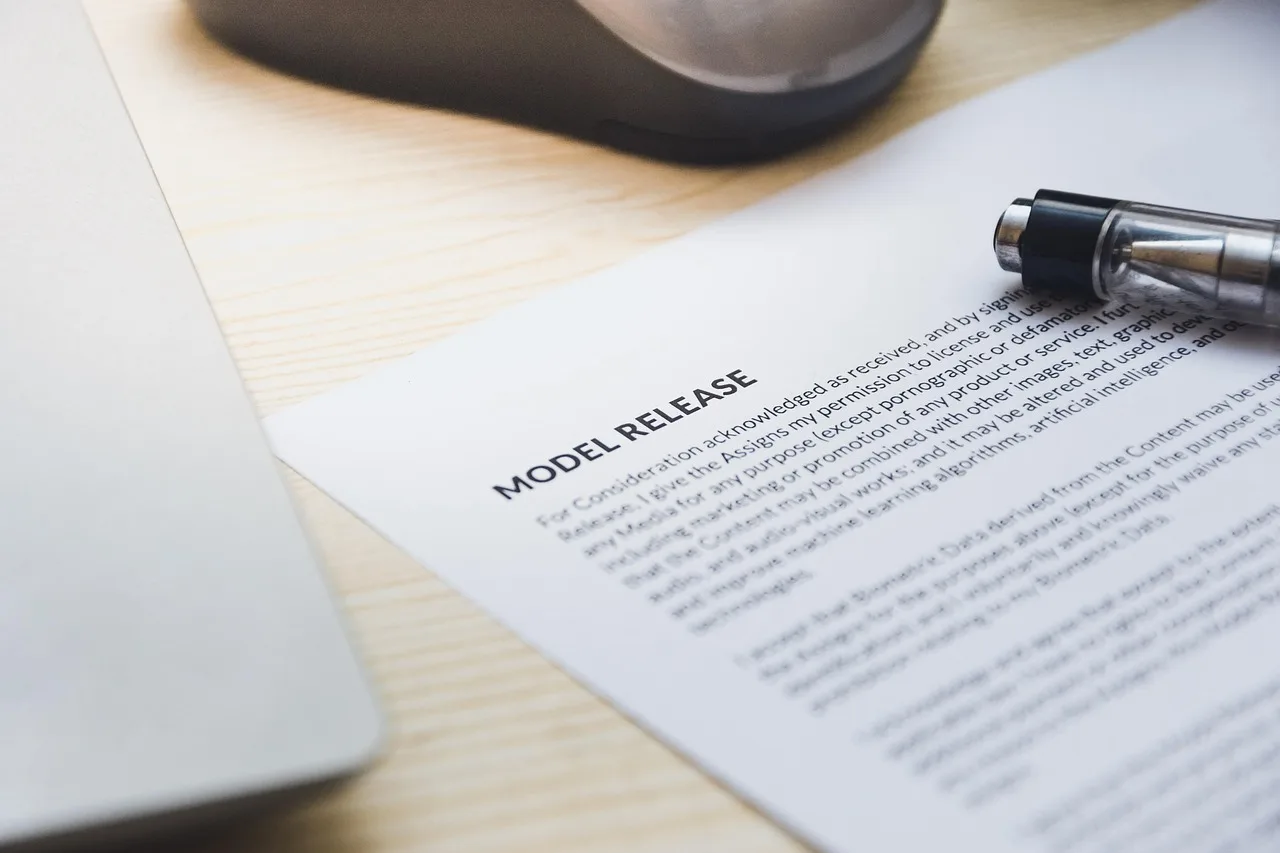
Use the linked participant release to document each identifiable person's permission for the planned channels, paid promotion, edits and term. A creator's copyright license does not by itself document the depicted person's consent. In California, Civil Code § 3344 addresses certain commercial uses of a person's name, voice, signature, photograph or likeness without prior consent; right-of-publicity rules vary by state.
Evidence to Collect
- Proposal and negotiation messages
- Final drafts and signed pages
- Invoices and payment records
- Conduct and delivery records
- Approvals and dated confirmation
Repair
Pull the proposal, the negotiation thread, every draft, invoices, delivery notes and approval messages. Sort the promises into those that may be enforceable under the governing law and those that need a signed writing. Do not backdate a replacement. If the parties agree today, sign a dated confirmation that states past facts accurately and sets future scope.
Rights broader than the deal conversation
The brief describes a six-week social campaign. The contract grants perpetual, worldwide use in all media, transferable to unnamed affiliates, with unrestricted edits and no further payment.
Repair
Redline it back to the business purpose. Narrow the media, the accounts, the territory and the term. Address partner use, paid placement, editing, and sublicensing. Also address synthetic or AI-assisted uses. Also address what happens to archived copies. Price each optional extension separately. A short term still needs a rule for cached or printed copies that outlive it.
SAG-AFTRA's Influencer Agreement materials describe covered digital channels, negotiated compensation and usage limits for eligible union work. The Influencer Agreement fact sheet is not a template for every creator or campaign. It shows that a framework's fit depends on several factors:
- platform
- performer
- producer
- ownership
- distribution
- term
Ownership assumed from possession
The client paid and got the drive, so it believes it owns the work. The editor assumes that cutting the piece gives rights in every source clip. Two creators call themselves co-owners without ever defining who contributed what.
Repair
List each protectable contribution and who owned it first under the applicable law. Then find the employment terms, assignments, exclusive licenses, nonexclusive licenses and third-party assets. Keep ownership separate from who holds the files. Get counsel before anyone declares joint authorship or work-made-for-hire status.
For U.S. deals, the Copyright Act, 17 U.S.C. § 101, defines work made for hire, and § 204(a) generally requires a signed writing to transfer copyright ownership. A commissioned creator's work qualifies as work made for hire only if statutory conditions are met; payment alone does not establish it. Federal copyright law does not replace state-specific image and likeness rules, so identify the governing state law for those issues.
Resist assigning ownership from memory, payment or file access. WIPO explains that copyright generally protects authors' literary and artistic works and includes economic rights handled differently across national laws. Its copyright overview gives international context, not an answer for one deal. National law and the signed agreement control.
Reuse appears without a fee
A brand lifts an organic creator post into paid ads, a retailer page, email, outdoor screens or a later campaign. The creator finds out after it runs.
Reuse Response Steps
- Pause the added use
- Preserve where and when it ran
- Compare license, release, platform terms
- Negotiate written extension with fees
- Set removal timing
Repair
Pause the added use. Record where it ran, when, on whose account and in what form. Compare the license, the release, the platform terms and the approval trail. If an extension is available, negotiate it in writing with fees and a removal date. Unchanged pixels are not unchanged use.
For an unauthorized copy of a creator's copyrighted photo or video, the rights holder can use a platform copyright reporting form or send a notice under DMCA § 512(c)(3) to the service's designated agent. The notice identifies the copyrighted work and disputed material, provides contact information, includes a good-faith statement and a statement under penalty of perjury, and carries a signature; the uploader may submit a counter-notice under § 512(g). YouTube's copyright removal request form and Meta's intellectual property reporting form are named platform routes, but copyright tools do not by themselves resolve a depicted person's likeness claim.
Approval deadlock
Four people at the brand send conflicting notes. The creator refuses a caption they say is misleading. Launch day arrives with no final approval, and the agreement says silence means nothing.
Repair
Name one authorized approver per subject area. Consolidate notes into one document, version the file, and set response deadlines. Decide in advance when the schedule moves, when an extra round costs more, and who resolves a legal claim. Keep the creator's right to reject work that is unlawful, deceptive, unsafe or outside the agreed scope.
A collaborator exits midproject
One creator leaves after capture. The shared drive, camera originals, project files, passwords and sponsor emails sit in personal accounts. The remaining creator wants to finish using the exiting person's performance.
Repair
Freeze access changes long enough to preserve authorized business records, then remove credentials that are no longer needed. Inventory what was delivered, what was paid, what was licensed, what participants agreed to, and what is unfinished.
Work out whether the existing performance can still be used after termination, or whether the piece needs a recut. Follow the agreed confidentiality and public-statement terms.
Worked example: the ad that ran twice
A skincare brand books a creator for three organic posts over six weeks. The contract grants perpetual worldwide rights in all media. Two months later the creator's face appears in a paid ad on a platform the brief never mentioned.
Preserve screenshots, dates, account names and landing pages; Meta Ad Library and Google Ads Transparency Center may help document ads listed in those libraries, but not every placement appears there. If the repurposed ad communicates an endorsement, separately assess the FTC's Endorsement Guides, 16 C.F.R. Part 255, including whether disclosures remain clear. Permission to reuse and ad-disclosure compliance are distinct questions.
| Step | What the record shows | What it changes |
|---|---|---|
| Scope check | Brief covers organic posts only | Paid placement sits outside the deal |
| Fee check | One flat fee, no extension rate | Added use has no agreed price |
| Term check | Perpetual grant, no end date | Rights outlast the campaign and the relationship |
| Evidence | Screenshots, ad library entry, dates | Supports a written extension or a takedown |
| Fix | Dated amendment, new fee, removal date | Converts a dispute into a priced extension |
The lesson is not that the contract was unenforceable. It is that nobody defined whether paid placement was included or set a written approval process before it happened.
When the wrong party carries the risk
A creator warrants claims the brand supplied. An agency hands the creator an indemnity covering uses the agency controls. A client wants the creator to absorb every platform takedown, including ones caused by the client's own edit.
Repair
Match each warranty and remedy to whoever controls the fact, the asset, the instruction, the account or the publication. Cap and insure the risk where the negotiation allows. Carve out losses caused by unauthorized edits or uses. Talk to a lawyer before signing a broad indemnity.
Common questions
These questions cover signatures, ownership, approvals and access when a creator deal goes wrong.
Can the parties sign after work begins?
They can document what they agree to now, covering current and future use. They should not invent an earlier signature or assume the new document cures every prior problem. A lawyer in the governing jurisdiction can say what the earlier conduct already bound.
Does paying for content transfer copyright?
Not by itself. Ownership follows authorship, employment, work-made-for-hire and transfer rules under the applicable law, plus whatever the parties effectively agreed. Payment creates a fee obligation, not an automatic assignment.
What should happen during an approval dispute?
Pause publication. Identify the controlling version of the asset and the one approver who can sign off. Separate creative preference from legal or scope objections, then follow the escalation path in the agreement.
Can an exiting creator delete the shared drive?
Not unilaterally. Preserve the authorized business records, protect personal material, and follow the contract and the law. Move or revoke access through a documented handoff so both sides can show what changed and when.