Features
Part of Creator collaboration guide to image permissions
Creator campaign scope change case: how to fix expanded use
This creator campaign scope change case covers copyright, image consent, a written amendment, and the platform and DMCA routes that stop unapproved use.
What to take away
- This creator campaign scope change case starts as two organic posts and changes when the brand requests paid advertising and retailer use.
- The creators control different contributions and cannot grant each other's rights by assumption.
- A pause prevents the expanded campaign from launching on the old price and paperwork.
- The amendment identifies media, term, fees, edits, approval, and participant authority.
- One creator declines the extension without losing payment for completed original work.
- The rules behind the repair are real US lawcopyright, the right of publicity, and the platform and DMCA takedown routes.
- The case is an illustration, not a ruling on any real contract.
The rules that decide an expanded use
This creator campaign scope change case is an illustration, but the rules it runs into are real. In the United States a copyright license reaches only as far as the terms it names, and because the deal keeps copyright with Maya instead of making the video a work made for hire, the brand holds a license and nothing more. Moving the footage into paid ads, a retailer page, or an email series the license never mentions is copyright infringement under the Copyright Act, and the owner can sue for it. A transfer or exclusive license of copyright also has to be in writing and signed by the owner, so an unsigned expansion cannot quietly rewrite the scope.
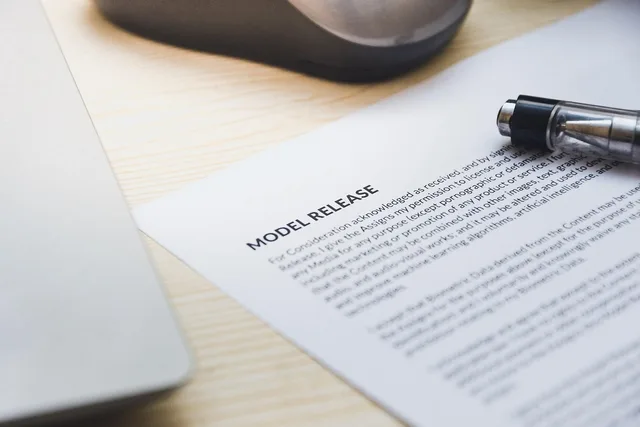
Jordan's side is a separate right. A person's name, likeness, and performance are protected by the right of publicity, which is state law and varies from state to state — for example, California Civil Code § 3344 and New York's Civil Rights Law §§ 50 and 51 — so a signed release, usually called a model release or likeness release, is needed before a face or voice goes into paid advertising. The video copyright and the appearance right can sit with different people, and each has to be cleared on its own.
When expanded use happens anyway, the online routes are concrete. The U.S. Copyright Office registers the work — for a US work, registration is what lets the owner sue for infringement — and the same office keeps the DMCA designated-agent directory used to serve notices under the Digital Millennium Copyright Act, 17 U.S.C. § 512. Registration is filed through the office's online system, where the Standard Application covers a single work like this video. Meta, TikTok, and YouTube each publish brand-content and ad policies that require paid partnerships to be disclosed with their branded-content tools, and each runs a named copyright channel — Meta's Rights Manager and its in-product copyright report forms, YouTube's copyright complaint webform and Copyright Match Tool, and TikTok's intellectual property report form — for footage or images posted without permission. A § 512 notice goes to the host or platform, which must act on it to keep its safe harbor.
A § 512(c)(3) notice is short and specific. It identifies the copyrighted work, identifies the infringing material and where it sits, gives the complaining party's contact information, states a good-faith belief that the use is unauthorized, states under penalty of perjury that the information is accurate and that the sender is authorized to act, and carries a signature. Sending it to the platform's designated agent, rather than to the uploader, is what triggers the host's duty to act expeditiously on the copy.
Maya Frame and Jordan Field are fictional food creators. A beverage company hires them to produce one short joint video and two still posts for their own social accounts during a four-week product launch. Maya directs and shoots. Jordan develops the recipe and appears on camera. An independent musician licenses a 20-second track for the two creator posts.
The agreement names a flat production fee and says the creators retain copyright. It gives the brand permission to repost the finished video once to its own organic social feed during the launch. It does not address paid ads, retailer sites, email, raw footage, or synthetic edits.
The brand sends a larger request
After approving the rough cut, the brand asks the agency to deliver vertical, square, and silent versions for paid social, a national retailer product page, and six months of email. It also asks for the raw recipe footage so another editor can make variants.
The agency calls these "format changes." Maya disagrees because the request adds publishers, paid media, six months, raw files, and new edits. Jordan is concerned that a silent cut with new text could make a product-performance claim they did not say.
The creators issue a narrow hold
Maya and Jordan do not withdraw the original campaign. They tell the agency that the approved creator posts and single brand repost can proceed, but the added uses are not authorized. They preserve the request, old scope, files, approvals, and music license.
Florida Atlantic University's communication office publishes separate release resources and says its university units should obtain appropriate forms for recognizable people in planned uses. That institutional release-form guidance does not determine the fictional creators' rights, but it reinforces the operational point that participant authorization should be found and checked before the use changes.
A rights matrix reveals four gaps
| Component | Current authority | Expansion gap |
|---|---|---|
| Maya's footage and final edit | two creator posts plus one organic brand repost | paid media, retailer, email, variants, raw files |
| Jordan's appearance and recipe performance | original defined posts | new ads, copy, term, retailer context |
| Music | 20 seconds in original creator posts | brand paid ads, retailer, email, recuts |
| Brand logo and product material | original campaign production | creator access to any new claim substantiation |
The brand cannot solve all four gaps with one instruction to the agency. Maya cannot approve Jordan's appearance. Jordan cannot license Maya's footage. Neither can expand the musician's grant.
Rights Gaps by Component
Component
- Maya's footage and edit
- two posts, one repost
- Jordan's appearance
- original defined posts
- Music
- 20 seconds, creator posts
- Brand logo and product
- original campaign production
Current authority
- Maya's footage and edit
- paid, retailer, email, raw
- Jordan's appearance
- new ads, copy, term
- Music
- paid ads, retailer, recuts
- Brand logo and product
- new claim substantiation access
Expansion gap
- Maya's footage and edit
- Jordan's appearance
- Music
- Brand logo and product
The amendment separates optional uses
The parties draft an amendment offering:
Amendment Terms to Confirm
- three named paid-social accounts, eight weeks
- one retailer page, twelve weeks
- two email placements, same period
- defined crops and silent versions by Maya
- no raw footage delivery
- no synthetic alteration or voice generation
- takedown within ten business days
The amendment is short and specific. It names the media it covers — paid social on the platforms already approved — and keeps the retailer product page out of scope. It ties the term to the original campaign window so nothing extends past it without a new signature. It splits fees into separate line items for production changes and media use. It bars new edits and requires both creators' written approval before any cut or product claim goes out. It also records who may sign for what: each creator grants only their own contribution, the musician's track has to be extended separately before any new media uses it, and no one can grant another person's appearance rights.
The contract summary uses the same basic logic as the Cornell Legal Information Institute's definition of a contract: an agreement creates enforceable obligations when the required legal elements exist. That source does not decide this scenario's validity or any image right, so counsel reviews the amendment under US copyright law and the right-of-publicity law of the creators' state. If the brand posted the footage before the amendment was signed, a takedown notice to the host is what gets the copy down while the parties negotiate.
Jordan declines the extension
Jordan accepts payment and publication under the original deal but declines paid and retailer use. The brand has three choices: keep the original scope, negotiate a different acceptable proposal, or make a new campaign without Jordan's image or performance.
Brand Choices After Jordan Declines
Jordan declines paid and retailer use
keep original scope
negotiate different proposal
It chooses the third. Maya offers a separate tabletop product video with no person visible, subject to a new concept, fee, music, claims review, and license. The original joint video remains on the two creator feeds for its four-week term and receives the single organic brand repost.
Offboarding closes the gap
The agency removes Jordan from the paid-campaign workspace and confirms that no raw joint footage was delivered to the retailer or ad account. Maya retains the production masters under her schedule. The brand keeps the signed original agreement, approvals, invoice, one-repost license, and amendment history.
The public does not receive a story about conflict. The creators post the original work as planned. The new tabletop campaign is contracted and recorded separately.
Lessons from the case
The repair worked because the creators did five things:
- separated the original authorized campaign from the proposed expansion;
- mapped rights by contribution and person;
- refused to call new media a mere format change;
- offered a specific amendment that split production changes from media use without pressuring either creator;
- documented access and file disposition after Jordan declined.
A scope change is not automatically bad. It simply needs new authority where it introduces new rights, work, risk, or value.
Common questions
Why could the original posts still run?
The fictional creators did not dispute the original defined scope. They paused only the requested expansion.
Did Jordan own the video copyright?
The case does not declare that. It states that Maya retained the footage and edit under the fictional deal while Jordan controlled separate appearance and performance interests.
Why exclude raw files?
Raw files were not an original deliverable and contained broader material and editing risk. The parties could negotiate them, but Maya chose controlled variants instead.
Could the brand replace Jordan digitally?
Not without a new legal and consent review. The amendment expressly excluded synthetic alteration, and other rights could also apply.